Overview
The overall goal of the Indiana University Microphysiological systems for Alzheimer’s Disease (MPS-AD) Center is to develop human induced pluripotent stem cell (iPSC)-based 3D models as reproducible and scalable platforms to enable the effective study of Alzheimer’s disease and Alzheimer’s disease related dementias (AD/ADRD), as well as to implement these models as platforms for drug discovery.
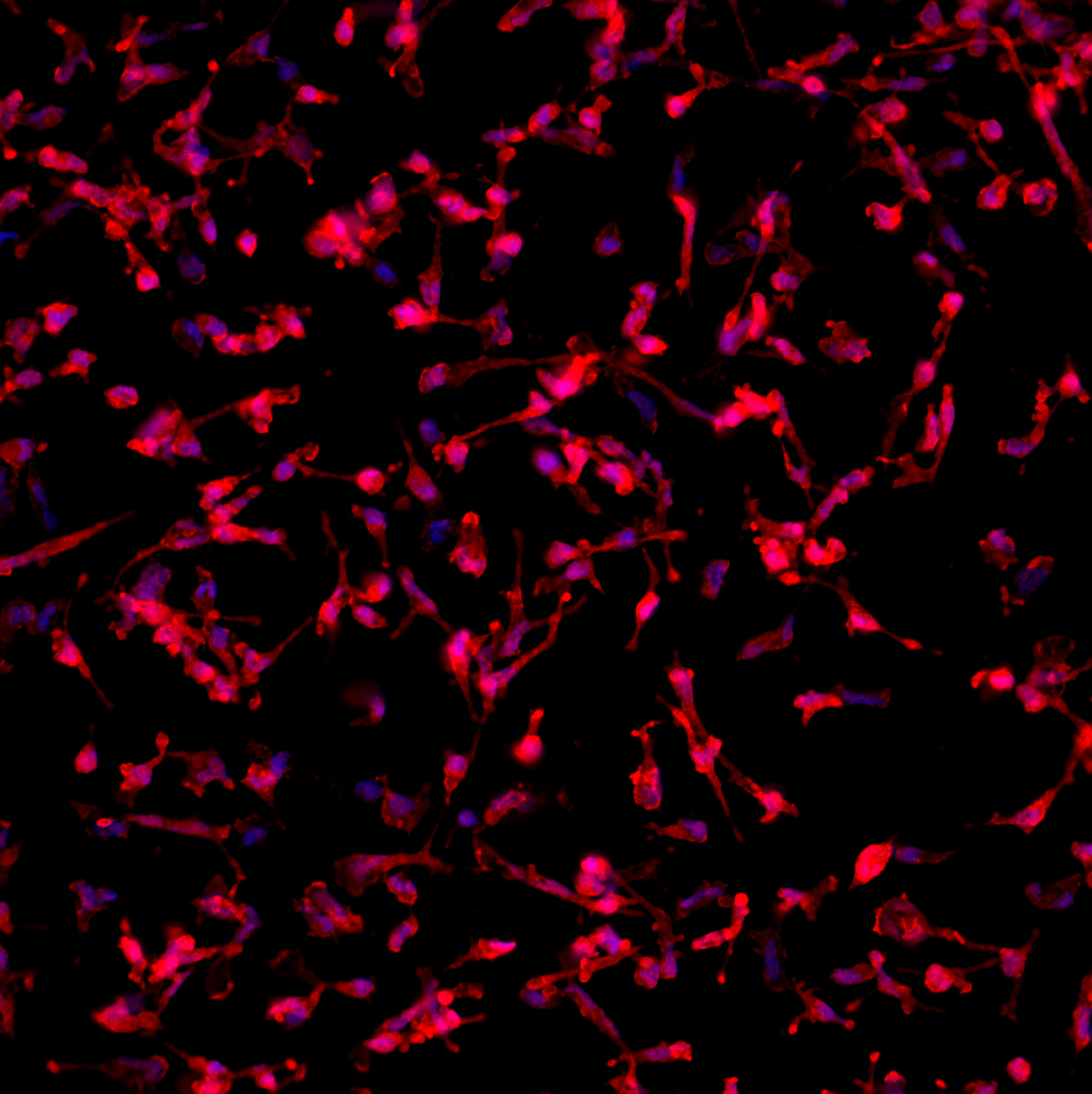
AD is a leading cause of dementia worldwide. While the core pathologies of AD are β-amyloid (Aβ) extracellular plaques and aggregation of hyperphosphorylated tau (pTau) within neurofibrillary tangles (NFTs), AD is also associated with many accompanying pathologies including inflammation, increased activation of microglia and astrocytes, dysfunction of vasculature, as well as synaptic and neuronal loss. More recent genome-wide association studies (GWAS) for sporadic late-onset AD (LOAD) point to a significant role for glial cells, especially microglia, as well as vascular cells including endothelial cells, astrocytes and pericytes. Understanding the biological pathways underlying AD therefore requires a deeper analysis of the dysfunction of all the cell types in the microenvironment. iPSCs have provided unprecedented access to the investigation of cellular pathologies associated with AD/ADRD, owing to their human cellular origin and the ability to direct their differentiation into any desired cell type associated with the disease state. However, studies to date using iPSCs for studies of AD/ADRD have often focused on individual cell types, used simplistic co-cultures, often lacked rigor, reproducibility and standardization, and showed high variability in outcome measures.
We are developing and optimizing 3D MPS models that consist of multiple types of cells to mimic physiological aspects of AD/ADRD using the most rigorous and reproducible protocols. We are also conducting drug discovery studies. Lastly, we are working to make these 3D MPS models and their associated data available to the AD/ADRD research community.

Neurons

Astrocytes
Microglia
Research Goals

Leadership
| Name | Role | Affiliation |
|---|---|---|
| Jason Meyer, PhD | Lead PI | Indiana University School of Medicine |
| Bruce Lamb, PhD | MPI | Indiana University School of Medicine |
| Donna Wilcock, PhD | MPI | Indiana University School of Medicine |
| Scott Canfield, PhD | MPI | Indiana University School of Medicine |
| Feng Guo, PhD | MPI | Indiana University Bloomington |
| Jeff Dage, PhD | MPI | Indiana University School of Medicine |
| Tim Richardson, PhD | MPI | Indiana University School of Medicine |
| Kun Huang, PhD | MPI | Indiana University School of Medicine |
| Jaya Viswanathan, PhD | Program Manager | Indiana University School of Medicine |
| Karina Leal, PhD | Co-Investigator | Sage Bionetworks |
| Catia Gomes, PhD | Co-Investigator | Indiana University School of Medicine |
| Abdul Syed, PhD | Co-Investigator | Indiana Biosciences Research Institute |
| Jie Zhang, PhD | Co-Investigator | Indiana University School of Medicine |
| Travis Johnson, PhD | Co-Investigator | Indiana University School of Medicine |
Contact us: mpsad@iu.edu









Jaya Viswanathan, PhD
Program Manager

Karina Leal, PhD, Co-I

Catia Gomes, PhD, Co-I

Abdul Syed, PhD, Co-I

Jie Zhang, PhD, Co-I

Travis Johnson, PhD, Co-I
Participating Institutions